Prophets
What Happens When the Most Powerful Person in the Kingdom Answers to Someone Even Higher?
When we hear the word "prophet," our minds often conjure images of a mystic figure, gazing into a crystal ball, foretelling a distant and hazy future. In the rich tapestry of history surrounding King David, his son Shlomo, and the construction of the first Beit HaMikdash (the Holy Temple), this popular image falls remarkably short. The prophet in ancient Israel was not merely a predictor of events; they were a foundational institution—a divine messenger, a political advisor, a moral compass, and at times, the most powerful voice in the kingdom, second only to God Himself. To understand this pivotal era is to understand the profound and often tense relationship between the crown and the prophet, a dynamic that shaped the destiny of a nation.
The Voice in the King’s Ear: Defining Prophecy in Ancient Israel
Before we delve into the lives of the specific prophets who guided, rebuked, and anointed kings, it is crucial to redefine our understanding of their role. The Hebrew word for prophet, Navi, is believed to come from a root that means "to call out" or "to announce." A prophet was one who was called by God to speak on His behalf. This was their primary function: to be a conduit for the divine word, delivering messages that the people, and especially their leaders, needed to hear—whether they wanted to or not.
This divine commission manifested in several key roles that were indispensable to the functioning of the Israelite monarchy:
- The Kingmaker: Prophets had the authority from God to anoint and legitimize a king. The act of pouring consecrated oil on a chosen leader’s head was a prophetic endorsement, signaling to the nation that this individual was God’s choice.
- The Moral Conscience: Perhaps their most important function was to hold power accountable. In an age of absolute monarchy, the prophet was the one figure who could stand before a king and challenge his actions, reminding him that even the most powerful ruler was subject to a higher law.
- The Strategic Advisor: Prophets often provided tactical and strategic guidance, especially in times of war or national crisis. This was not fortune-telling, but rather conveying God’s will regarding a specific course of action.
- The National Historian: Ancient texts refer to records such as "the chronicles of Samuel the seer" and "the chronicles of Nathan the prophet." This suggests that prophets were among the primary scribes and historians of their time, recording events as a dialogue between God and His people.
The prophet was therefore a complex figure, deeply embedded in the political and spiritual life of the nation. They were the constant, often uncomfortable, reminder that the kingdom’s success was contingent not on military might or political cunning, but on its faithfulness to the divine covenant established in the Torah.
Samuel: The Bridge Between Judges and Kings
The story of prophecy in the monarchical era begins with Samuel, a titanic figure who straddled two ages. As the last of the great Judges, he guided Israel before the advent of kingship. As a prophet, he reluctantly ushered in the era of the monarchy. When the elders of Israel came to him demanding a king "like all the other nations," Samuel was displeased. He saw their request as a rejection of God’s direct rule over them.
In a powerful prophetic warning, Samuel laid out the stark realities of what a king would mean: conscription of their sons for his army, appropriation of their daughters for his court, heavy taxes on their fields and vineyards, and the seizure of their best servants and livestock. It was a sobering speech on the cost of centralized human power. Despite this, the people persisted, and God instructed Samuel to grant their request. He then anointed Saul, a tall and unassuming man from the tribe of Benjamin, as Israel’s first king.
The relationship between Samuel and Saul established the template for all future king-prophet dynamics. When Saul disobeyed God’s direct command during the war with Amalek—sparing the enemy king and the best livestock when God had commanded total destruction—Samuel delivered a devastating rebuke that severed their relationship and pronounced the end of Saul’s dynasty: "For rebellion is like the sin of divination, and arrogance like the evil of idolatry. Because you have rejected the word of the Lord, he has rejected you as king."
This encounter powerfully demonstrated that the prophet’s authority, derived from God, could both establish and revoke a king’s mandate. It was Samuel who was then sent, in secret, to the house of Jesse in Bethlehem to anoint a young shepherd boy named David as the future king, setting in motion the next chapter of Israel’s history.
Nathan: The Courage to Speak Truth to Power
If Samuel established the model, it was the prophet Nathan who perfected the art of speaking truth to power during the reign of King David. Nathan served as David’s most trusted advisor, and their relationship is a case study in prophetic courage.
Early in David’s reign, when the king expressed a desire to build a permanent temple for the Ark of the Covenant, it was Nathan who delivered God’s message. The message was two-fold: David, a man of war, would not be the one to build the Temple, but God would, in turn, build David an "eternal house"—a dynasty that would endure forever.
However, their most famous and dramatic interaction came at the darkest moment of David’s life. At the zenith of his power, David committed adultery with Bathsheba and then orchestrated the murder of her husband, Uriah the Hittite, to cover his sin. The king, it seemed, was untouchable, above the very law he was meant to uphold.
It was into this moral vacuum that Nathan walked. Rather than a direct accusation, which David could have easily dismissed, Nathan used a masterful parable. He told the king of a rich man with many flocks and a poor man with only one beloved ewe lamb. When a visitor came to the rich man, instead of taking from his own flock, he seized the poor man’s lamb and prepared it for his guest. David, a king responsible for justice, was enraged by this story and declared, "As surely as the Lord lives, the man who did this must die!"
In that moment, Nathan delivered one of the most powerful lines in all of scripture: "You are the man!" He stripped away the king’s self-deception and forced him to confront the enormity of his crime. What followed is a testament to both Nathan’s bravery and David’s character. Instead of executing the prophet for his insolence, David crumbled in repentance, saying, "I have sinned against the Lord." Nathan’s courage ensured that no one, not even the anointed king, was above the moral law, and David’s response solidified the ideal of a leader who is ultimately accountable to God. The psalm David composed in the aftermath of this confrontation—Psalm 51—remains one of the most powerful expressions of repentance and is recited to this day.
Gad the Seer: Prophecy in Action
While less famous than Samuel or Nathan, Gad, known as "David’s seer," played an equally vital role throughout David’s life. He was a constant companion and advisor, particularly during the years David was a fugitive from King Saul. Gad’s guidance was practical and direct, a clear example of the prophet as a divine strategist.
Gad’s most significant intervention, however, came late in David’s reign and directly led to the establishment of the Temple’s location. Against the advice of his general Joab, David conducted a census of the people, an act portrayed as being rooted in pride and a reliance on military numbers rather than on God. As a consequence, God sent the prophet Gad to David with a choice of three punishments: three years of famine, three months of fleeing from his enemies, or three days of plague.
David chose the plague, saying, "Let us fall into the hand of God, for His mercy is great; but let me not fall into the hand of man." As the angel of death reached Jerusalem, God relented. At that moment, Gad instructed David to go and build an altar to the Lord on the threshing floor of Araunah the Jebusite, the very spot where the plague had been halted. David purchased the site, built the altar, and made sacrifices.
This piece of land, purchased by David at the direction of the prophet Gad in an act of national atonement, would become the sacred ground upon which his son, Shlomo, would build the First Temple. The word of the prophet once again directly shaped the physical and spiritual landscape of the nation.
A House of Prayer, A Vision of Prophets
The Beit HaMikdash was, from its very inception, a project steeped in prophecy. The initial idea, born in David’s heart, was first filtered through Nathan. The divine promise of an enduring dynasty was given in the same breath that delayed its construction. The very ground it was built upon was designated by Gad. The Book of Chronicles even states that the architectural plans themselves were given to David by the spirit of God, a form of direct prophetic inspiration.
During the reign of King Shlomo, as the magnificent Temple was finally built, the prophetic voice did not fall silent. While Shlomo was renowned for his divine wisdom, prophets like Ahijah the Shilonite were active, famously foretelling the division of the kingdom as a consequence of Shlomo’s later failings. This demonstrates that even at the height of national glory, with the Temple standing as a symbol of God’s presence, the prophets were there to warn that structures and rituals were meaningless without justice and faithfulness.
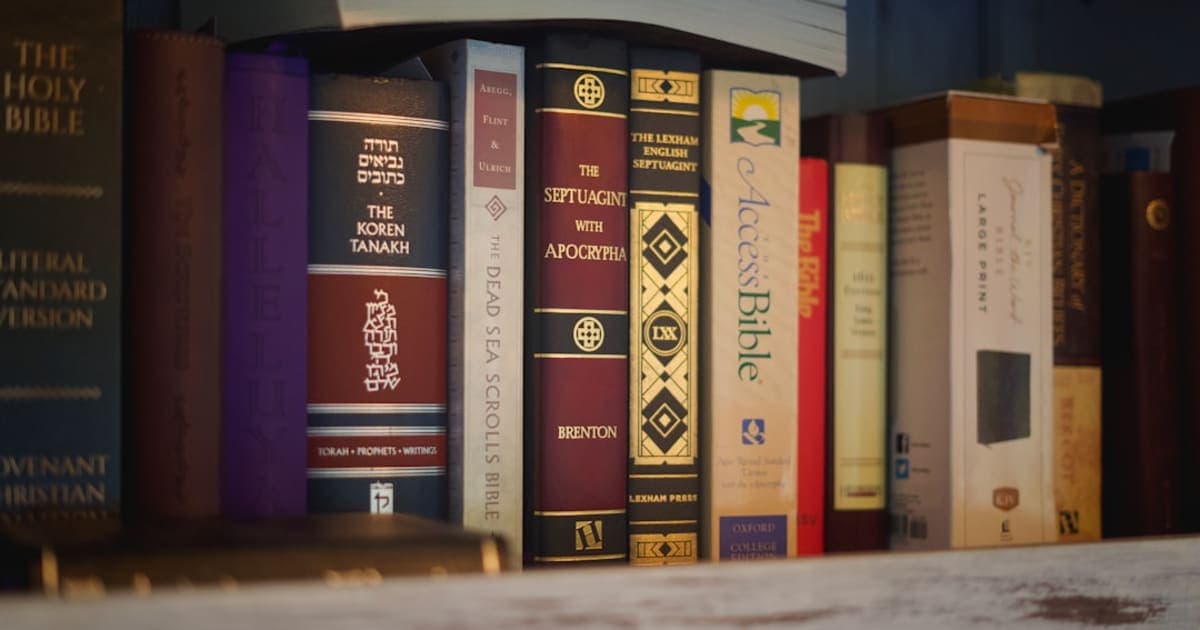
In the centuries that followed, the Temple remained a central focus of prophetic discourse. Isaiah envisioned it as a future "house of prayer for all nations." Jeremiah stood in its courts and warned of its destruction if the people did not mend their ways. Ezekiel, in exile, had a grand and complex vision of a future, restored Temple. The books of these prophets are preserved in the Nevi’im section of the Tanach and are read as the Haftarah in synagogues every Shabbat.
The Enduring Legacy
The prophets of the era of David and Shlomo were far more than simple soothsayers. They were the architects of a new form of governance, one in which earthly power was forever accountable to divine authority. They were kingmakers and king-breakers, military strategists and national archivists, moral challengers and conduits of divine comfort. Through Samuel, the monarchy was born under prophetic scrutiny. Through Nathan, it was taught humility and the rule of law. And through Gad, the very location of its most sacred site was chosen.
Their legacy is a timeless reminder that true leadership is not about unchecked power, but about justice, humility, and a willingness to listen to the voice of truth, however uncomfortable it may be. This principle—that leaders answer to a higher authority—became one of Judaism’s most enduring contributions to civilization, influencing concepts of constitutional governance and the rule of law that shape the modern world.
They ensured that for the kings of Israel, the most powerful sound in the kingdom was not the clash of swords or the cheer of a crowd, but the quiet, persistent, and unyielding word of a prophet. And that word is still heard today, every time a passage from the Prophets is chanted in synagogue, reminding us that faith demands not only worship but justice, kindness, and moral courage.