Havdalah Candle: Why Is It Braided?
Why Is the Havdalah Candle Braided?
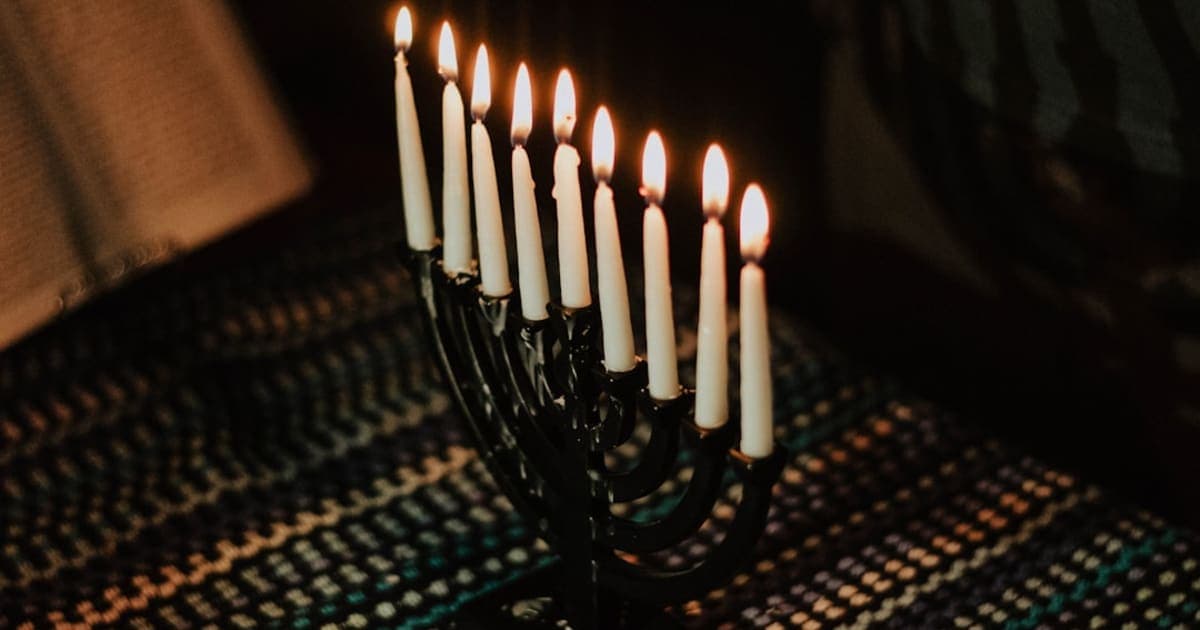
If you have ever attended a Havdalah ceremony, you know the moment: the lights are dimmed, a tall braided candle is lit, and its flame dances with unusual brightness, casting a warm glow over everyone gathered. But why does the Havdalah candle look different from every other candle in Jewish practice? Why is it braided, and why does it have multiple wicks?
The answers reveal layers of symbolism about unity, creation, and the boundary between the sacred and the everyday.
The Basic Requirement: Multiple Wicks
The blessing recited over the Havdalah flame is "borei me'orei ha'esh" — "Who creates the lights of fire." Notice the plural: me'orei, not me'or. The Hebrew text explicitly uses the plural form, indicating that the flame used for this blessing must consist of more than one light.
To fulfill this requirement, the Havdalah candle must have at least two wicks. When two or more wicks are held close together, their flames merge into a single, larger torch-like flame — a m'durah (bonfire) rather than a simple ner (candle). This combined flame satisfies the plural language of the blessing.
In practice, most Havdalah candles are made with between two and six wicks braided together, with three or four being the most common. The result is a strikingly bright flame that stands out from ordinary candles — which is precisely the point.
Why Braided? The Symbolism of Unity
While the basic requirement is simply that there be multiple wicks, the universal custom is to braid them together rather than just holding separate candles side by side. This braiding carries deep symbolic meaning.
Coming Together After Separation
Havdalah is all about separation — between holy and ordinary, between Shabbat and the weekdays. The braided candle provides a counterbalance to this theme. Yes, we are making distinctions, but we are also affirming unity. The individual wicks, each capable of burning on its own, come together to create something brighter and stronger than any single flame.
This mirrors the Jewish ideal: distinct elements — different people, different days, different realms of experience — intertwined to create something beautiful and unified. Separation and unity are not contradictions; they are two sides of the same truth.
Torah and Mitzvot
Some commentators see the multiple wicks as representing the different facets of Torah study and mitzvah observance. Just as many strands of learning and practice weave together to form a complete Jewish life, the braided wicks combine to produce a single, powerful light. The message: the light of Torah is not found in any single teaching but in the totality of wisdom woven together.
Community and Family
The braided candle also symbolizes the strength of community and family. Individual strands are thin and fragile; braided together, they are strong and resilient. As the new week begins and everyone goes their separate ways — back to work, school, and the demands of daily life — the braided candle reminds us that we are strongest when we are connected to one another.
The First Fire: Adam's Discovery
The Talmud teaches that fire was first created by Adam on the very first Saturday night — the first moment after the world's first Shabbat ended. As darkness fell and Adam experienced night for the first time, God gave him the insight to strike two stones together, producing a spark. That spark became fire — humanity's first act of creation after the original day of rest.
Every week at Havdalah, when we light the braided candle and recite the blessing over fire, we are reenacting that primordial moment. We are connecting ourselves to the dawn of human creativity and acknowledging the gift of fire — of light, warmth, and the ability to transform the world around us.
This is also why we specifically make the fire blessing at Havdalah rather than at any other time. Fire represents human creative power — the very thing we refrained from using during Shabbat. As the new week begins and we resume creative work, we first pause to acknowledge the Source of all creativity.
Looking at the Light: The Fingernail Custom
During the blessing over the Havdalah candle, there is a widespread custom to curl your fingers inward toward your palm and look at the light reflected on your fingernails. Why?
Deriving Benefit from the Light
Jewish law requires that when we make a blessing over something, we actually benefit from it. Looking at the play of light and shadow on your fingernails is a way of practically using the candle's light, thereby making the blessing meaningful and not in vain.
Symbolism of Light and Shadow
Your fingernails, when curled inward, create a clear boundary between the lit side (reflecting the flame) and the shadowed side. This visual distinction mirrors the very essence of Havdalah — the separation between light and darkness, holy and ordinary. You are literally seeing the theme of Havdalah played out on your own hands.
Renewal and Growth
Some say we look at fingernails because they are constantly growing and renewing — a symbol of the fresh start that each new week represents. As Shabbat ends and a new week begins, we look at a part of our body that embodies renewal and growth.
What Makes a Good Havdalah Candle?
Havdalah candles come in many varieties, from simple twisted beeswax to elaborately decorated multi-colored versions. Here is what to look for:
- Multiple wicks: This is the essential requirement. Most commercially available Havdalah candles have this.
- Good braiding: The wicks should be tightly enough braided that their flames naturally merge when lit.
- Appropriate length: A Havdalah candle that is too short may not last through the entire ceremony. Most standard Havdalah candles burn for 15-20 minutes, which is more than enough.
- Drip protection: Since the candle is held at an angle over a plate, some dripping is normal. Beeswax candles tend to drip less than paraffin ones.
No Havdalah Candle? No Problem
If you do not have a Havdalah candle, you can fulfill the requirement by holding two ordinary candles close enough together that their flames touch and merge into one. Birthday candles, Shabbat candles, or any household candles will work in a pinch. The key is that the flames must join together.
A Match or Lighter Alone
A single-wick match or lighter flame is not sufficient for Havdalah, since the blessing requires plural lights. But a match can certainly be used to light the Havdalah candle itself.
Colors and Decorations
Traditional Havdalah candles were typically natural beeswax — golden yellow in color. Today, they come in a rainbow of colors: blue and white (Israeli colors), red, purple, multi-colored, and more. Some are decorated with glitter, embedded with spices, or scented.
There is no specific halachic requirement regarding color or decoration. Choose whatever brings you joy and enhances the beauty of the ceremony. Many families develop a preference over time and come to associate a particular style of candle with the warm memory of Havdalah in their home.
Havdalah Candles as Gifts
Because of their beauty and symbolic resonance, Havdalah candles make wonderful gifts — particularly for someone beginning to explore Shabbat observance. A set of Havdalah candles, a decorative spice box, and a beautiful Kiddush cup together make a complete Havdalah set — a meaningful gift for a new home, a wedding, or someone starting their Jewish journey.
The Candle Goes Out, the Light Remains
At the end of Havdalah, the braided candle is extinguished — typically by dipping it into the small pool of wine that has overflowed from the cup. The room goes dark for a moment. But the memory of the flame, like the memory of Shabbat itself, lingers.
The braided Havdalah candle teaches us that even as we separate and distinguish, we find our greatest strength and brightest light when we come together. Individual strands, woven with intention, create a flame strong enough to illuminate the transition from the sacred to the everyday — and to remind us that a spark of holiness can be carried into every day of the week ahead.