Why Do We Eat Dairy on Shavuot?
Why Do We Eat Dairy on Shavuot?
Is there any Jewish custom more delicious than eating cheesecake on Shavuot? The tradition of eating dairy foods on Shavuot is one of the most widely observed and enthusiastically embraced customs in Jewish life. But behind the blintzes, cheesecake, and cheese bourekas lies a wealth of fascinating explanations.
The Main Explanations
The Kashrut Explanation
When the Israelites received the Torah at Sinai, they received the laws of kashrut (kosher eating) for the first time. They realized that their existing pots, pans, and dishes had been used to cook non-kosher food and were no longer usable. Since kashering (purging) vessels and preparing kosher meat requires time and knowledge they did not yet have, they ate dairy, which requires no special preparation or utensils. This is the most commonly cited explanation.
The Land of Milk and Honey
The Torah describes the Land of Israel as a land flowing with milk and honey. Eating dairy on Shavuot connects the giving of the Torah (which occurred in the desert) to the Promised Land toward which the Torah was guiding the people. The Torah is itself compared to milk: Like honey and milk, it is under your tongue (Song of Songs 4:11).
The Numerical Connection
The Hebrew word for milk, chalav, has a numerical value (gematria) of 40, corresponding to the 40 days Moses spent on Mount Sinai receiving the Torah. Eating dairy food symbolically connects us to that period of divine revelation.
The Offering Connection
On Shavuot, a special bread offering of two loaves was brought in the Temple. Some explain that we eat a dairy meal followed by a meat meal (with separate bread for each, as required by kashrut) to recall these two loaves.
The Mountain Connection
The word for cheese in Hebrew, gevinah, is related to the word for hill or mountain. Psalm 68 describes the other mountains looking with envy at Mount Sinai, which was chosen for the revelation. The mountains are described with a word that evokes cheese, creating a playful connection between dairy food and the Sinai experience.
Popular Shavuot Dairy Foods
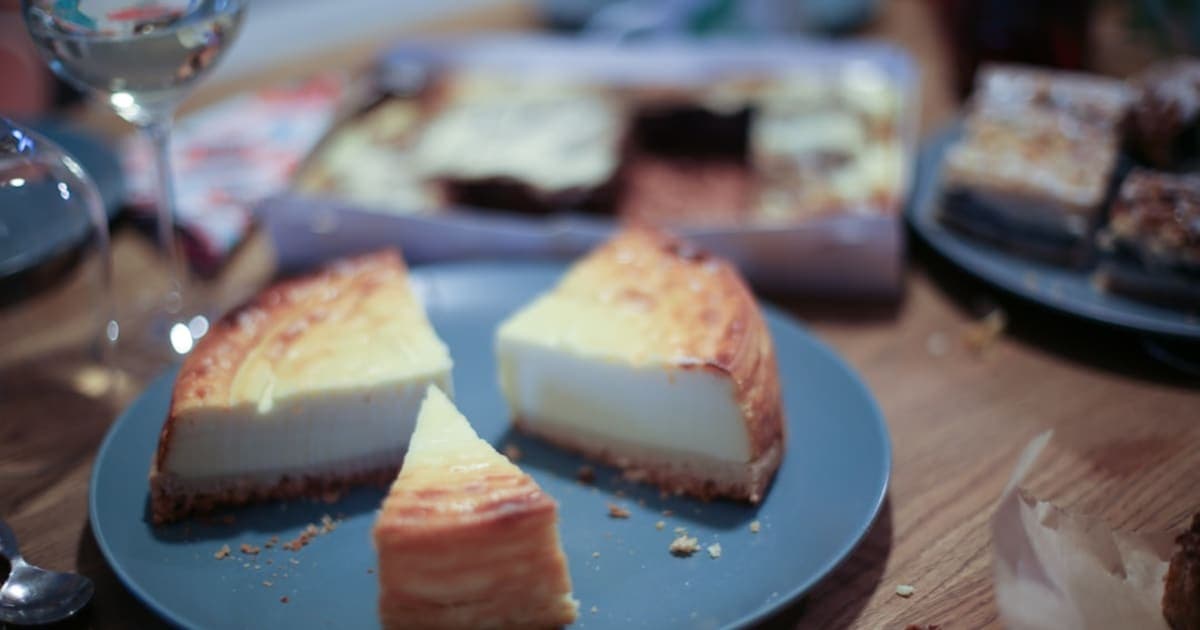
Cheesecake: The undisputed star of the Shavuot table. New York-style, Israeli-style, no-bake, baked, with crust, without crust, individual portions or a grand whole cake, every family has its favorite version.
Blintzes: Thin crepes filled with sweetened cheese and pan-fried to golden perfection. Often served with sour cream, fruit compote, or both.
Cheese bourekas: Flaky pastry filled with cheese, a Sephardic Shavuot staple.
Lasagna: Cheese lasagna is a popular Shavuot main course, offering a hearty dairy meal.
Quiche: A versatile option that can feature various cheeses and vegetables.
Ice cream: A crowd-pleasing dessert, especially for Shavuot celebrations with children.
The Deeper Connection
Beyond the specific explanations, there is something fitting about dairy on Shavuot. Milk is the first food a newborn receives, the most basic form of nourishment. At Sinai, the Jewish people were in a sense newborn, receiving the Torah for the first time. The Torah itself is our spiritual nourishment, the milk that sustains us from birth. Eating dairy on Shavuot expresses our relationship to Torah as something fundamental, nourishing, and life-giving.
There is also a connection to the gentleness of dairy. Shavuot, unlike many holidays, has a quiet, contemplative quality. The all-night Torah study, the reading of Ruth, the flowers and greenery, all create an atmosphere of sweetness and peace. Dairy food, with its mild and comforting flavors, fits this mood perfectly.
For more on Shavuot, see our guides to the giving of the Torah, decorating with flowers, and the Omer.